KOI CLUB OF SAN DIEGONEWSLETTERAPRIL 2024 |
|
|
- A member of Koi Club of San Diego Jack Chapman takes Best of Size 3 for a Shiro Utsuri and First Place awards for Kumonryu Size 3, Hi or Ki Utsuri Size 3, and Showa Size 2 at the 1st Annual All American Koi Show - Las Vegas
- Scotty Yee won First Place for his Showa Size 5
- Congratulations Jefferey Duncan for winning Tancho size 5
|
|
|
|
|
JAPANESE FRENDSHIP GARDEN VOLUNTEER NEEDED FOR MONDAY MORNINGS AROUND 8:00 AM
|
We are looking for a member who can help us at the Japanese Friendship Garden on Monday mornings around 8:00am.
Before there was a koi pond in the upper Garden area there was grass. That’s all. We suggested for years that we would take care of the filter system if they would build a koi pond which would become the central jewel to the Garden (there was no canyon Garden at the time). Norm Meck of our club designed the pond (with a few modifications) and Voila! we have a koi pond. We have been taking care of and cleaning the filter system since 1999 really as a community service to Balboa Park.
We would appreciate any help even if you can’t commit to every Monday. Being able to lift 35-40 pounds is necessary to open each section of the deck where the filter is located. AND you get to pick the brain of our KHA/Show Entrant Chairman, Koi Jack, who has been overseeing the fishes health since 2005
If interested, call me and leave a message at 619-200-4146 and/or email me at lpluth@cox.net.
Linda Pluth
Japanese Friendship Garden Liaison
|
|
|
|
PRESIDENT'S MESSAGEby Lenore Wade |
|
|
Great news to report!!!
A promise made is a promise kept. Matt signed the papers with the Del Mar Fair Grounds, and the Koi Club of San Diego will have a show in January 2025. BUT, like anything else on such a large scale, it will only be a success if YOU, the members, step up to help.
The official dates are January 24, 25, and 26 in the Bing Crosby Hall, which means our lay-out will be different from the Activity Center. In fact, there will be lots of changes, but Matt Rhoades will be our show chairman, so everything will be in good hands.
It seems that the fair grounds thought it was more profitable for them to turn our usual location, the Activity Center into stables for the races. Right now, there is tons of dirt on the floors inside.
Also, another change is that we were usually paired with the Home Show, but not this time. This year, there will be a cat show in the O’Brien Hall next to us. What could be more exciting than having fish and cats as neighbors?
A show is a huge expense, and vendors help to mediate the costs. So, if you, or someone you know has a business that is compatible with the show, please let them know about the possibility of joining us. Think outside the box: clothes, art, knick-knacks, and more.
During the up-coming months, there will be much talk, many plans to make, and fish dreams to materialize.
Many thanks to the 2 Jack Story families for welcoming us into their homes and sharing their love of Koi with all of us. The turn-out was beyond my expectations. By my count, there were over 35 people present from all over the county. The concept of going to different locations for one meeting did not cause any problems…by having fish ponds, we have all become adaptable!
At the meeting one of the members brought up a good point to ponder. Many businesses offer their employees the option of Matching Funds for charitable donations. This could be a real boon for the club. I know some of you are thinking, “I am retired” so it is not for me. But most of us have children that might be willing to do it for us in their name. It is just an option to think about.
As I have mentioned in the past, June is the time for elections. All five board positions are open. While most of us have an idea of what the jobs incur, please step forward and ask questions if you are interested. There are usually only 2 meetings a month. The Steering Committee meeting is on the second Wednesday of each month, and our general meeting is the second Sunday of the month (May being the only exception).
Our April 14th meeting will be at the home of Gale and Robert Moriarity in Chula Vista. Their address is 1672 Ocala Avenue. I have been told it is easy to get to. This is our first visit to see their koi. I hope you will join us. Please bring any items you can for our donation table.
I hope to see you there. |
|
|
April Koi Club of San Diego Meeting
April 14th, 2024 |
|
|
OUR HOSTS WILL BE
Gale and Robert Moriarity
Social hour - 12:00 noon - 1:00 pm
Meeting begins at 1 pm 1672 Ocala Ave, Chula Vista, CA 91911 |
|
|
|
|
|
|
ADDITIONAL UPCOMING EVENTS
|
|
|
STEERING COMMITTEE MEETING
|
|
|
Wednesday, April 10th at 7:00 pm (earlier if you are ordering food) ALL MEMBERS WELCOME!
Dennys
2691 Navajo Road El Cajon, CA 92020
|
|
|
|
|
PONDER PROFILE
by Lenore Wade
Gale and Robert Moriarity |
|
|
Since I have been writing these profiles, I have been warmly received into many homes, in a variety of settings. But yesterday, as I went into the home of Robert and Gale Moriarity in Chula Vista, I was welcomed with wide open doors. I was overwhelmed with the fresh and free flowing air that entered through the 12- foot open glass doors that looked out onto a most inviting garden. Of course, having typically beautiful San Diego weather made the experience even more special.
In September 1970, Gale and Bob moved into their home which sat on a half-acre of land that backed up to Interstate 5. I was told that it was “flat and nothing but dirt” (except for 2 trees). Looking now, that is hard to imagine. They both enjoy gardening, and have created a beautiful setting for their koi pond which they built in 2014. The ground-level pond has a liner which is hidden behind large rocks and is about 12 feet by 8 feet. It is fed by a cascading stream that comes down a slope and under a bridge. There are only 5 large fish and 2 small butterflies that like to hide. They have to keep a simple fence around it to keep the heron and other birds from soaring in and grabbing a meal.
As houses that were built fifty years ago, theirs was not large. It started out with 3 bedrooms, one bathroom, a small kitchen, and a tiny dining room. At one point, they decided it was too small for their growing family and over twenty-two years, they knocked down walls and dug up cement and created a masterpiece that is huge with an equally large second story. The massive stone fireplace is almost dwarfed by the size of the room.
As I gazed around the big room, I noticed an old, well-worn saddle mounted on a special stand. Not every home has a saddle sitting prominently in view. (Gale told me there are six more saddles in the garage.) I knew there was a story to be told.
Bob was born and raised in Indianapolis and rode horses most of his life, until his family moved to Los Angeles. After Vietnam, he left the military and settled in San Jose. He bought a big beautiful red horse.
Born in Washington state, Gale, from the age of about six, always wanted a horse and begged her mom for one. Mom said, “when |
|
|
you get older, you can buy your own horse.” They later moved to Bakersfield, still, no horse. As she got older and moved to San Jose, she bought a horse.
I hope you are grinning as you read this. They boarded their horses at the same ranch, where they met, became a couple and soon after married. The horses came to San Diego with them, but had to be sold to make the down-payment on their new home. |
|
|
Over the next thirty years, Gale worked in a variety of teaching situations. She taught parenting classes before becoming a mother to 2 sons. She is most proud of the work she did with children and adults who were dyslexic. Over the course of his adult life, Bob had several jobs, which also included teaching. He retired from the San Diego Harbor police in 1989.
Gale loves to make Waldorf salad, which she usually brings to |
|
|
our meetings. At the meeting in Ramona, I noticed that she had some colorful Nasturtium laying on top. When I questioned her, she said they are edible. Yesterday, with her gentle prodding, I ate my first beautiful orange Nasturtium, including the leaves. Not quite sure I would call it “tasty”, but it was interesting.
|
|
|
Attending the 2024 ZNA So Cal Koi Show
By MB Rhoades |
|
|
On Saturday, March 16, four KCSD members (Jill Rhoades, Rick / Jill Leach, and I) went on a road trip to attend the ZNA Koi Show in Gardena, CA. The show has taken place on the grass outside the Gardena Civic Center for many years. There were 8-10 vendor booths there selling koi-related products.
The 100-plus koi being shown varied in size, but many fell into the upper ranges of sizes 5- 7+ (30 plus inches). This show always has a heavy showing of gosankes, and it didn’t disappoint. There was a beautiful 25+” matsukawabake that tanchos, so many |
|
|
kohakus, and a couple of chagois that looked like mini whales. If you are into koi, this is a candy store for viewing. The five ZNA judges started judging soon after the Taiko Drummers finished their performance to open the show. They judged the size one and twos first, with fish handlers moving the koi into tubs for better viewing. Then, they moved up through the sizes/classes, moving back and forth between the 40 tanks.
Scotty Yee, a fellow KCSD member, was there as an exhibitor and working behind the scenes. He mentioned to us that he had brought a Friendship Award and needed us to pick out a koi for the award; “but don’t pick one from these two tanks” ( those tanks were his fish). The four of us walked around the tanks separately at first, but then together showing our individual possible selection. It got down between a size 6 goshiki (1 vote) and what was classified a hi bekko (3 votes). I talked to 3-4 koi authorities, and none would agree on this koi’s class. It was an orangish red / black pattern koi. I heard goshiki; I heard beni kumonryu; I heard “it is a freak like WORM !”. I filled out the Friendship Award form and turned it in.
|
|
|
|
After 2.5 hours of walking the show, our group decided to start for home, but first stop for lunch. We stopped at a restaurant about a mile or so away from the show. When we sat down, Jill Leach said (pointing), “ Isn’t that Scotty Yee?” I had my back to him, who was maybe three feet away. He and his lovely wife, Erica, had stepped away from the show for a few minutes to get a bite. They were heading back later to attend the Awards Banquet for the show.
|
|
|
On my drive home I received a text from Scotty saying:
“I think I did pretty well”.
(Note: See the picture of Scotty’s with his swag)
The next morning, I read the results for the show, and Scotty had taken the awards for:
Grand Champion (B)
Reserve Grand Champion
Mature Champion
Adult Champion
NW ZNA Chapter Award
All in all, the road trip was great. We came up with some great ideas for running future shows, saw many wonderful koi, and caught up with fellow koi kichi. Next stop: Vegas, baby! (All America Koi Show). Road Trip! |
|
|
Photos from the March Club meeting at the homes of Jacks Story by Bill Newell
|
|
|
WELCOME NEW MEMBERS!
Norm and Nataliya Turoff
Rick and Amy Warren
WELCOME BACK RENEWING MEMBERS!
Joy Arnswald
Thom & Lynne Fuller
Hal Groeneboer
Jeff & Donna Kane
Jill & Rick Leach
Dick Long & Bonita Chamberlin
Bruce & Marlene Miller
Matt & Jill Rhoades
Linda Schell-Pluth
Julia Schriber
Jack & Jeanne Story
Jack & Carrie Story
Bev & Scott Sylvester
Scotty & Erica Yee
|
|
|
|
|
KHA KORNERby "Koi Jack" Chapman |
|
|
Updated
Spring Time around Aeromonas Alley and Koi Skin Ulcers |
|
|
|
|
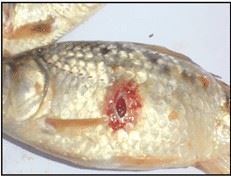
Well spring is here and after our club’s last meeting concerning spring time around your pond, I came home and thought it time to update and try to combine my past articles on spring time as it relates to Aeromonas and koi skin ulcers. Little long in the tooth, but hope I don’t lose you or you abandon me. LOL So, time to update my last article on about one of the most commonly encountered koi bacterial infections known as Hole in the side (ulcer) or more properly referred to as Aeromonas Hydrophilia. This bacterium is an opportunist pathogen that usually takes advantage of injured, sick, or otherwise immune weakened koi. For Aeromonas Alley a key factor about what is going on in your pond and your koi is what is the pond water TEMPERATURE - and I like to know this both in the early morning and late afternoon. Just be glad we live here and not where it gets really cold in the winter months – can you imagine having to deal with snow and ice? However, it is important to know how low your pond temperatures get and for how long during each of our winter seasons. One of the things you need to be mindful of is the range of temperatures in which your koi are most vulnerable to what triggers bacterial infections again most often caused by Aeromonas and WHY it is happening. Think pond temp and what’s going on in my bio-filter and my koi’s immune system. Yes, it is a combination of factors. First Aeromonas bacteria is inactive at 39F and starts to become active at 40F – with each degree to about 60F it becomes exponentially more active as in rapid reproduction. While at the same time, our koi only start to improve their immune system after 55F. For the science nerd in us all, this is measured by the presence of white blood cells (WBC) in a blood sample and there is a reported case study in the literature that showed zero WBC in some koi at below 55F. So between 40F and 55F, we got the bad bugs multiplying like crazy while the koi’s immune system is close to nonexistent due to minimal white blood cells. To make matters worse it has been reported that the bacteria that typically infect our koi thrive in harder water and at higher pH’s (hello southern California). Before you get upset – this is one of Mother Nature’s ways to weed out the weakest for the survival of the species. (Ref: MN rule book page 3) LOL. Additionally, their numbers severely increase with accumulated detritus and mulm on the bottom of your pond to flourish and – in converse – their numbers are GREATLY reduced in clean ponds with goooooooood water quality and proper circulation!!! The temperature zone of most volubility to Aeromonas infections is 47F to 62/63F – what we like to call Aeromonas Alley. Note: At lower pond temps your koi are less active and sit on the bottom more leading to increased contact opportunity for body and fin rot from Aeromonas infections. Seventy-seven or 78F is generally accepted and been reported as the optimum temperature for koi metabolic efficiency - as well as the temperature at which their immune system will be close if not at max. It is believed that the koi’s immune system is at about 25% efficiency when they emerge from Aeromonas Alley and attain 50% around 70F. Now at the same time, the bacteria in your biofilter are becoming more active to handle the pond nitrogenous waste that will increase with feeding, decomposing organic matter and increased koi activity. Nitrosomonas bacteria activity, which converts ammonia NH3 to nitrites NO2, is reported to be at or close to zero at 40F and will reach 50% capacity at 60F and at 100% efficiency at 75F. At the same time Nitrobacter bacteria converts NO2 to nitrates NO3 (to complete the nitrogen cycle) but at a slower pace being reported as not active till about 60F but also reaching full activity at 75F. A word of caution for us in southern California -- with us not having to deal with real winter conditions, Aeromonas will most likely continue to populate (be active) in our ponds during the typical winter months (especially this past winter – hell as I up-date this article and look at my pond temp log on Jan 26 at 10AM it is 62F (ambient) and my pond is 58 F and BEWARE if you start to feed your koi too early and too high in protein – it will exit your koi as undigested fish poop (mulm on bottom of pond) – OTHERWISE known as the best food possible for the bad bacteria at the worst time!!! Yes – as I like to say POOP WATCH TIME. All the above is just another good reason to remember to keep your weekly water changes at 10 to 15 percent and periodically check your water quality for pH, NH3, NO2, NO3, KH, and O2. Spring is the most stressful time of the year for our koi and some pond owners alike. Got to have a plan and be especially observant of your pond and your koi at this time of year.
Now to expanding on koi skin ulcers to complete a better basic understanding of the kinds of things you need to consider when managing your pond to avoid ulcers. Also, a good thing to review prior to spring activities or even now with the new koi from Japan available for purchase. In 2020, I had more than the usual pond calls during spring and summer with sick koi and skin (scales)/fin/mouth disorders – a couple dozen over an eight-month period – maybe a record for me (2/3 club members) and most with different circumstances. About every 7 years or so we get an exceptional disease-causing species of Aeromonas. How bad you ask, well after a needed veterinarian visit to the Japanese Friendship Garden koi pond, which our club volunteers to maintain, we got to catch 24 koi and give two injections every third day for 5 treatments and we had 18 survivors. YES, I admit if we had called the vet a week earlier, we most likely would have had less fish loss!!! As a good general rule, I always do a skin scrapping of the ulcer site to rule out parasites (another article not now) and a few flukes (gyrodactylus- skin) parasites were also found upon microscopic examination and appropriate pond treatment completed (Kusuri – Fluke M) X2 along with a couple potassium permanganate treatments a week apart to pond at a rate of 2.4 ppm to acquire a treatment dosage level of 2ppm for several hours – till turns brown. One level teaspoon (about 6 grams) per 790 gallons for a 2ppm treatment was the formula used for dosing. Potassium Permanganate usage requires its own article and not at this time LOL. I’ll also leave doing a Culture and Sensitivity swab at ulcer site for the later treatment article.
When I get asked the question – What causes ulcers in koi????? - My answer is “just about everything!!” And yes, I get some funny looks and are you serious expressions. I follow up with how much time do you have? – and with me that can be a problem as I love talking about koi as you all know LOL. While external ulcers are a very common issue with koi, to just say it’s a bacterial infection and maybe supported by a culture and sensitivity test and treated with antibiotics is simply not the end of the story! As a matter of fact, it’s just the beginning if you want to reduce the risk of future body/mouth ulcers and fin issues on your koi. An understanding of why koi develop ulcers can be a wealth of information and knowledge about your pond’s environmental system and the multitude paths that can lead to your koi’s reduced immune response which is the leading cause of koi illnesses, only one of which is body ulcers. When I do a pond call, I bring a collection of reference materials to share with pond owners while exploring the possible problems that they are experiencing with their koi and their pond, one of which is the best pictorial descriptions of the many possible causes leading to body ulcers on your koi. Also, I believe this pictorial description will provide the observer with the salient key points when thinking about areas of possible concern or better yet areas for future exploration, as we all progress (get smarter) as true koi hobbyists. As a side note: as we move through winter our koi slow their activity and spend more time on the bottom of our ponds. And they rest where they feel the safest (warmest) in less turbulence from water pond currents – so if your maintenance schedule or lack thereof has left debris (a buildup of pond waste material) collected on the bottom of your pond and your koi spend more time resting their body and fins within this material you may experience, after having no summer problems, external skin issues at this time of year and for next couple of months and even into summer. I encourage pond owners every couple weeks to look closely at each koi for any developing external issues. Yes, a list of all your koi can be very useful as a check off when completing this task. This is the single event in my pond practice that has led to the discovery of most of my koi’s early external issue detection and trust me it’s much easier on me and my koi to deal with these impending problems early on in their development. It also is the same time that I seem to notice individual changes to my koi that I truly love or not so much with their general overall development. r/koi jack |
|
|
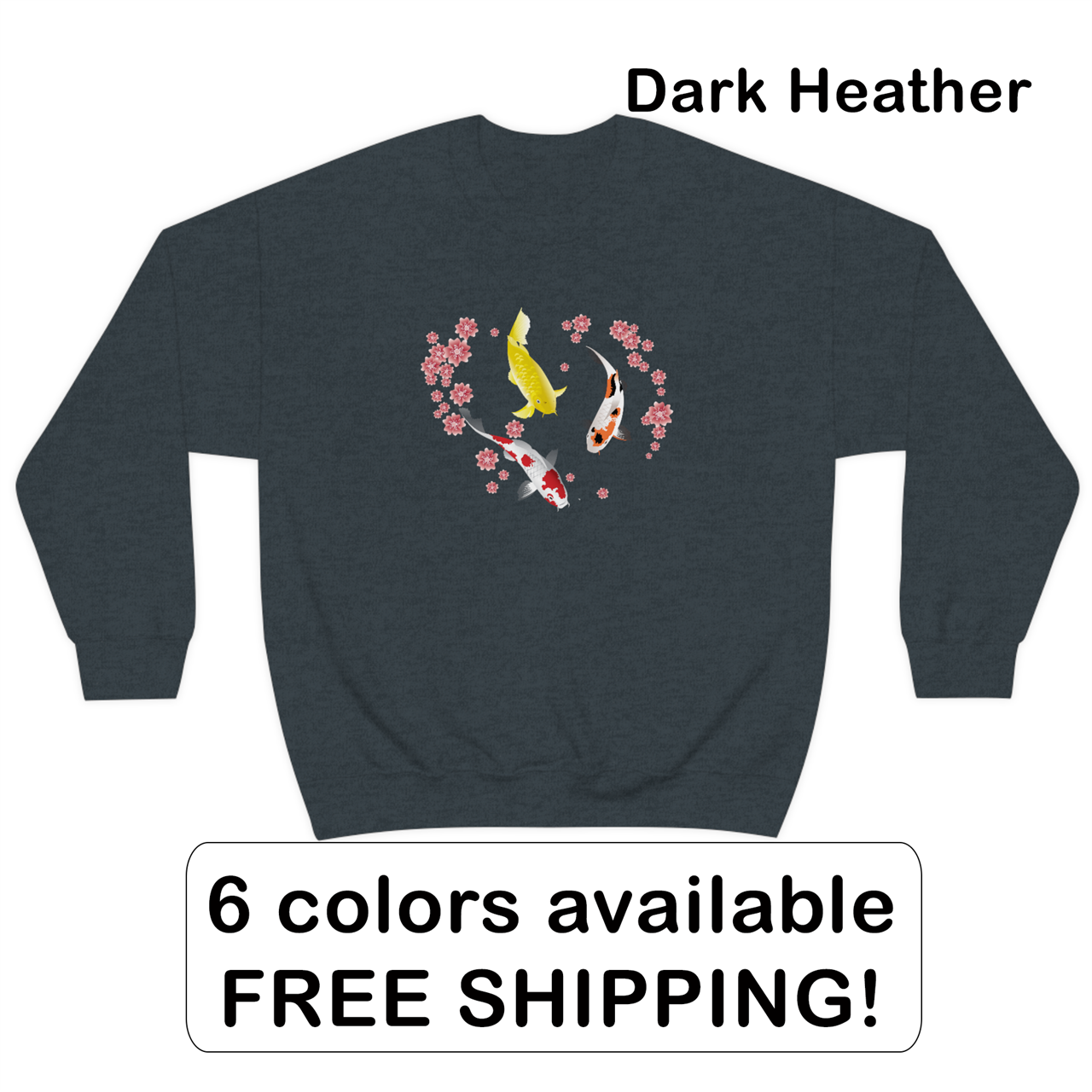
PLEASE VISIT OUR APPAREL SHOP!THANK YOU JAMIE KANES FOR YOUR BEAUTIFUL DESIGNS! |
|
|
|
|
Koi Person of The Year 2023 Julia Schriber
|
|
|
|
|
First VP-Program: Matt Rhoades |
|
|
Second VP-Venue: Ben Adams |
|
|
Newsletter editor/ Webmaster: Julia Schriber |
|
|
Membership Chairman: Jill Leach |
|
|
Koi Health Advisor/
Librarian: Jack Chapman |
|
|
Club Historian: Dr. Galen Hansen |
|
|
Property Manager: Al Pierce |
|
|
Correspondence Secretary: Shirley Elswick |
|
|
Japanese Friendship Garden Liaison: Linda Pluth |
|
|
Koi Health Advisor/
Water Quality: Jack Chapman |
|
|
To Host a Meeting: Ben Adams |
|
|
To Submit an Article: Linda Pluth |
|
|
Program/Activities Suggestions: Matt Rhoades |
|
|
This message was sent to you by {Organization_Name}
If you no longer wish to receive these emails, you can unsubscribe at any time |
|
|
|
|
|